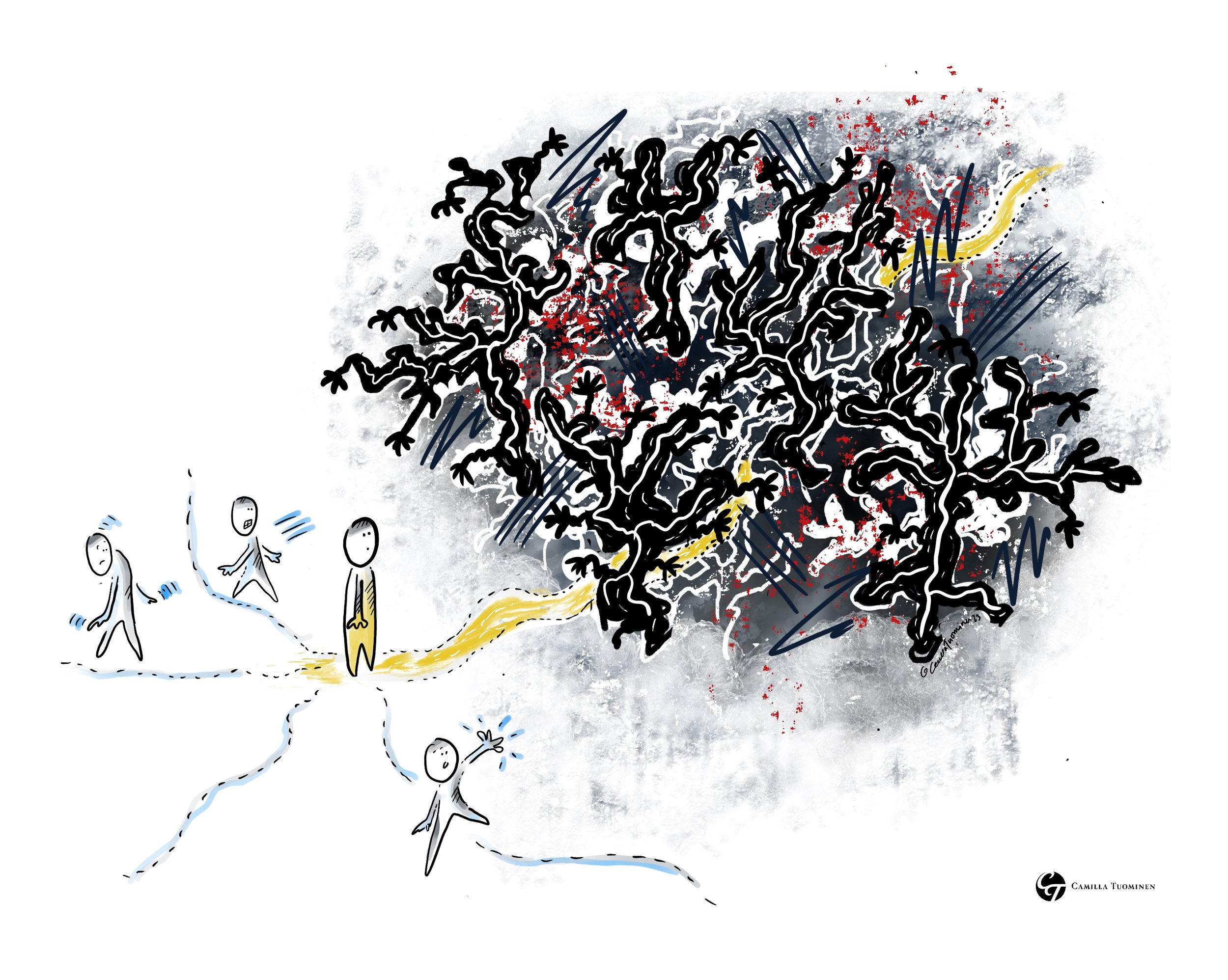
We don’t know how to handle NORMAL negative emotions in (work)life.
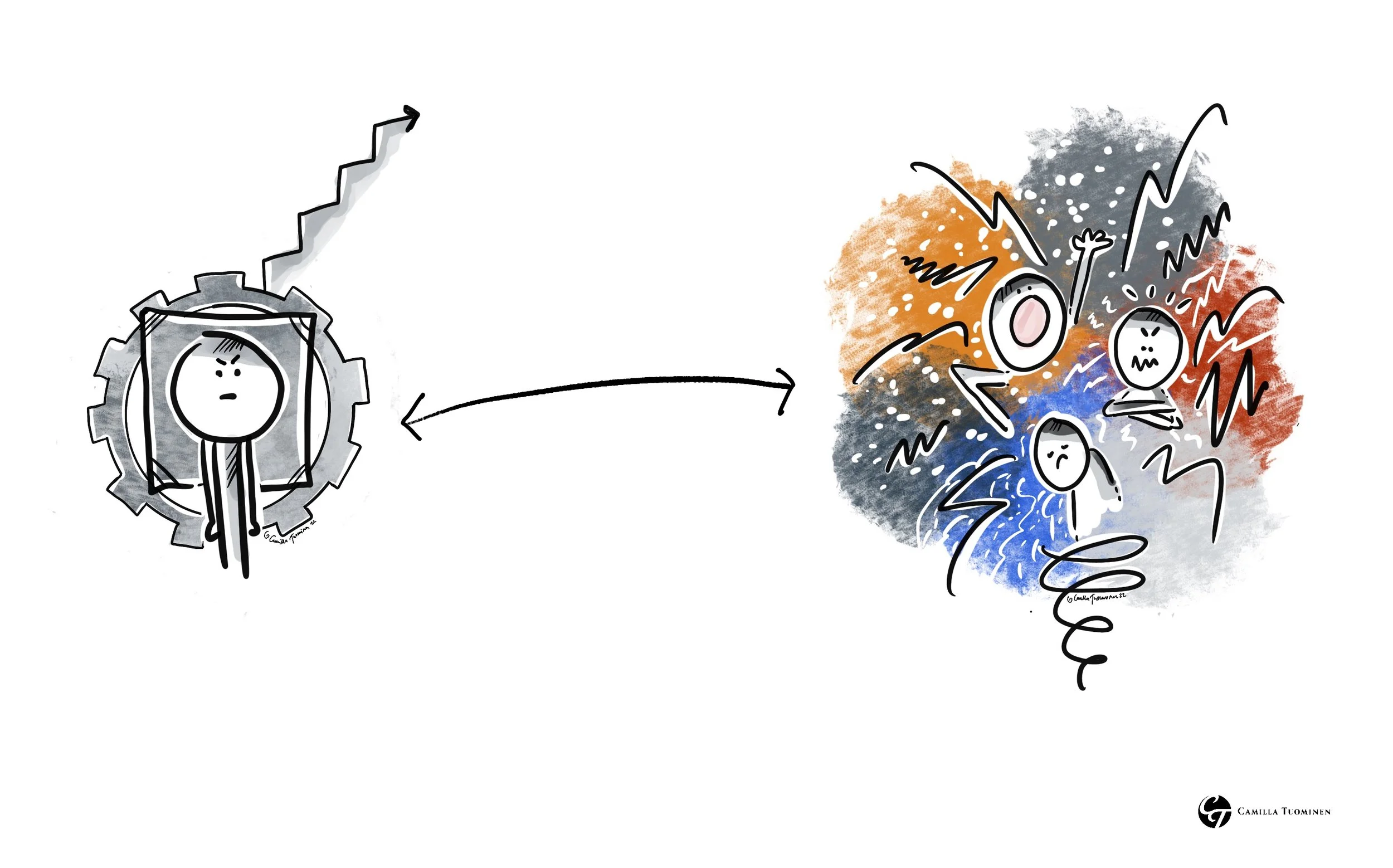
In my view and experience (with working with over 500 companies), our inability to handle normal negative emotions is one of the biggest problems in our (work)life today. It often looks like we’re split into two extremes.
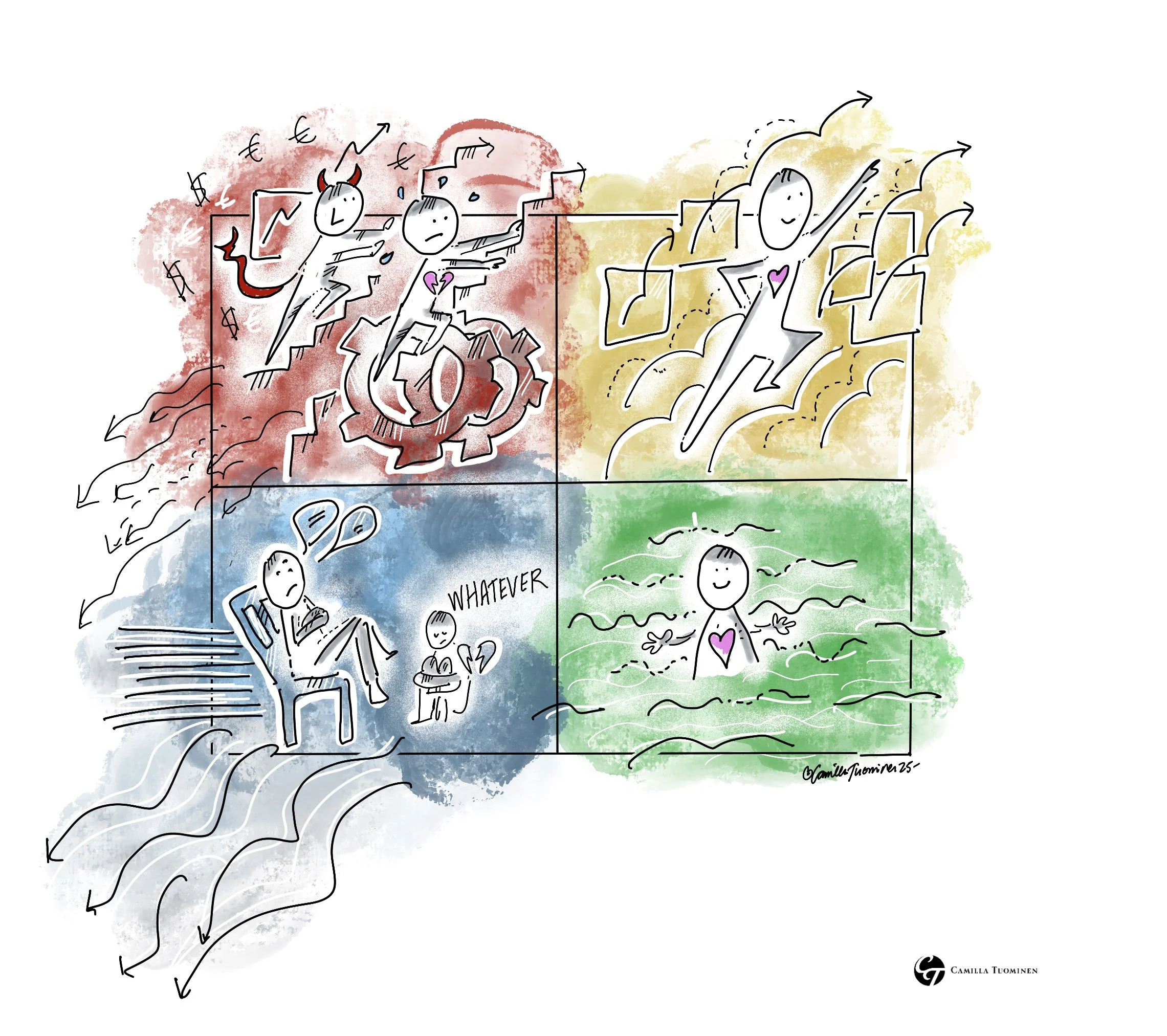
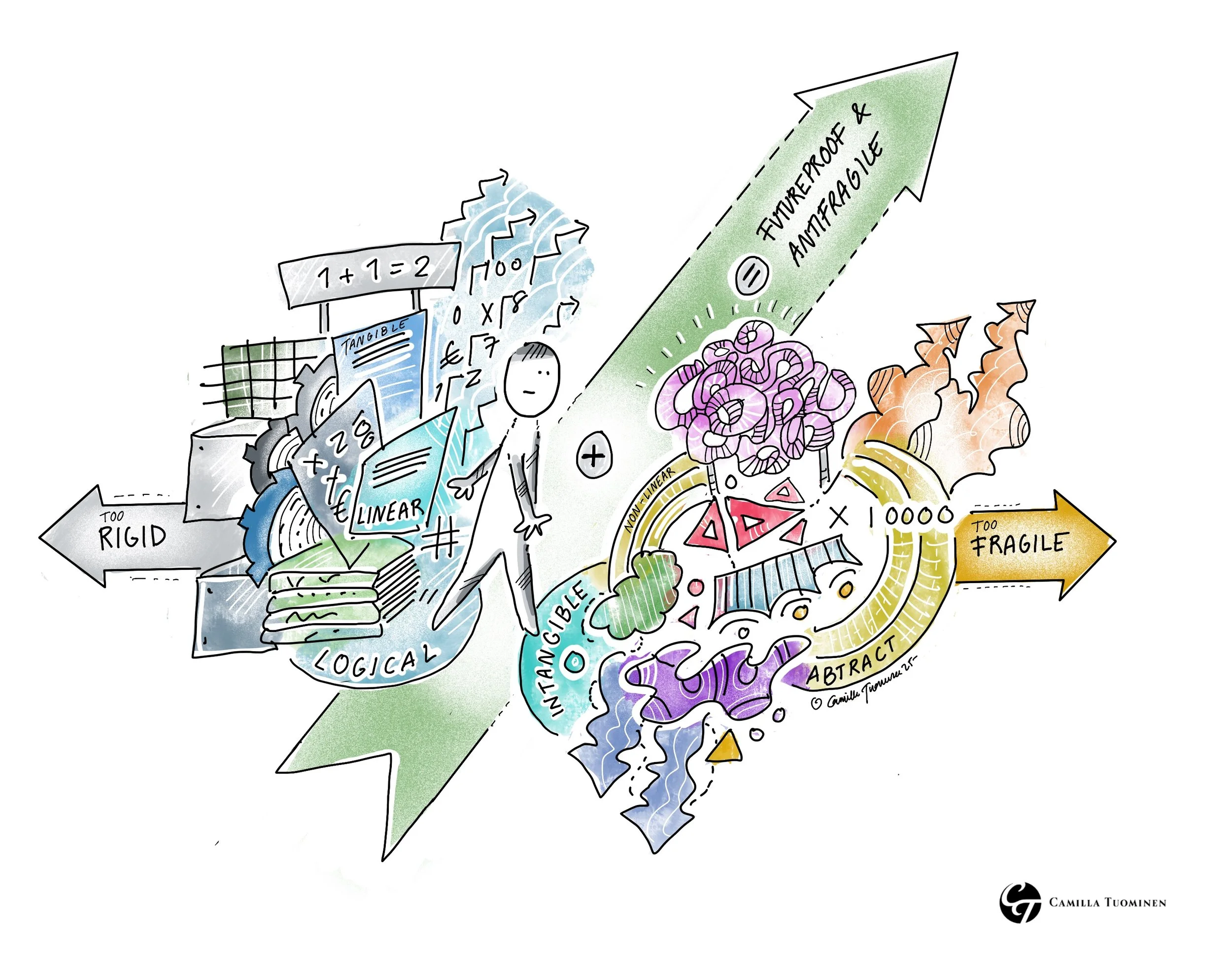
On one end, there are those who block, silence, hide, or deny emotions—our own and others’. Emotions are still seen as weakness. Life is approached as something purely linear, logical, and rational, as if emotions simply don’t exist. As if humans were purely rational machines.
On the other end is a group that worries me just as much.
Here, negative emotions are something to avoid altogether. Discomfort is treated as a signal to escape, postpone, numb, overanalyze, or immediately “fix”—rather than face. When going gets tough, we take sick day, as described in this Hesingin Sanomat article recently (5.1.2026):
Neither approach is healthy. Both are avoidance strategies—just different ones. And very costly to the organisations.
Negative emotions are not a failure or a malfunction. They are a natural part of life—and important information.
They are early signals telling us that something matters. They tell us that something is happening, often something outside us, that affects our needs, boundaries, or values.
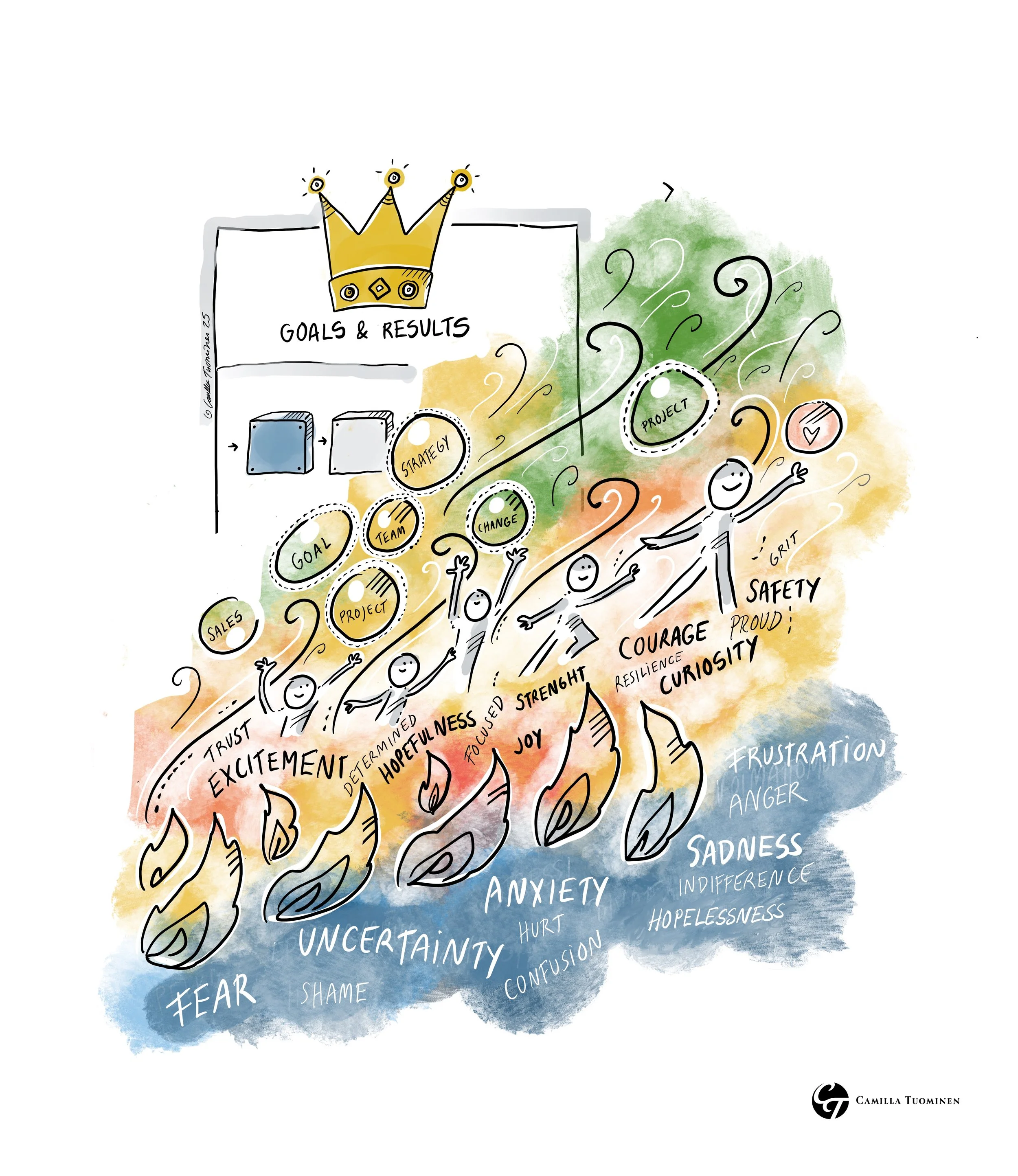
When we ignore the first, quieter emotional signals—uncertainty, doubt, mild discomfort—we rarely get relief. We get escalation. We intensify emotions.
Difficulty turns into pressure. Uncertainty turns into anxiety.
Procrastination creates far more suffering than the original discomfort ever did - I might have noticed this behavior in myself recently too
As Jørgen Vig Knudstorp brilliantly quoted Hermann Hesse in his speech in London:
“It is not because things are difficult that we do not dare; it is because we DO NOT DARE that things are difficult.”
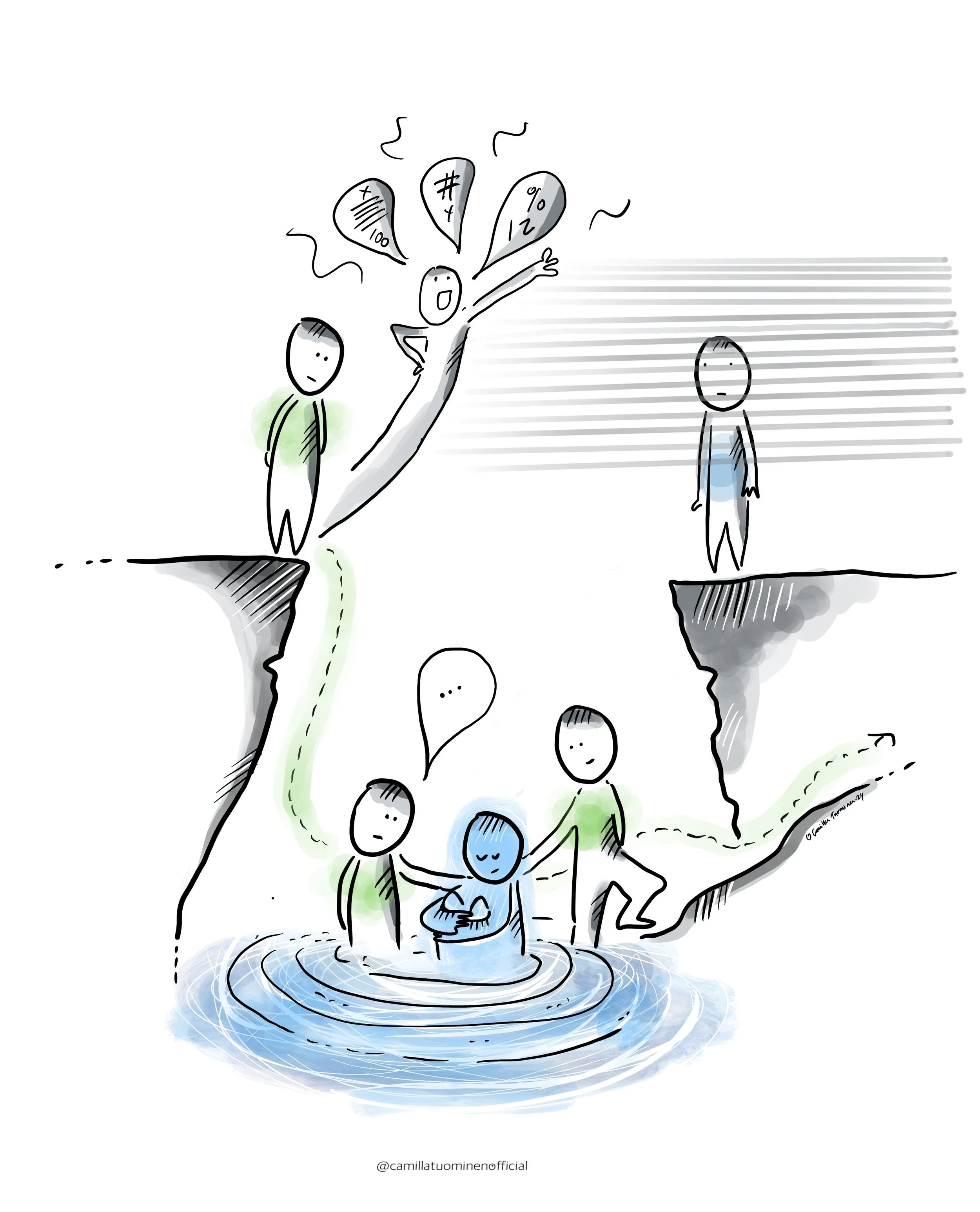
(This is especially clear in leadership when postponing difficult discussions…)
And in the end, we are usually forced to face the situation anyway.
So what to do instead?
Emotional maturity isn’t about suppressing emotions—or being led by them. The real skill lies in the middle ground.
There is no magic wand. Instead the way forward is to accept both positive and negative emotions without being ruled by them.
Staying curious about what they are trying to tell us. Knowing when to protect ourselves and set boundaries—and when to lean in, push through, toughen up, and grow.